
The PSLE English Oral Examination plays an important role in assessing how well students can communicate confidently and effectively. With changes introduced to strengthen practical language abilities, students are now expected to demonstrate better reading fluency, clear expression, and thoughtful responses during oral assessments. These changes have encouraged many parents to explore how English Tuition can support their children in developing stronger communication skills.
The purpose of English Tuition is no longer limited to helping students prepare for examination questions. Modern learning approaches focus on building confidence, improving spoken English, and teaching students how to express ideas naturally in different situations. Understanding the new oral assessment format allows parents and students in Singapore to prepare more effectively and develop skills that are useful beyond the classroom.
Why the PSLE English Oral Assessment Matters
The Oral Examination evaluates a student’s ability to use English in real-life communication. While written papers test reading and writing abilities, oral assessments focus on how students speak, interpret information, and respond appropriately.
Strong oral communication skills help students to:
- Express opinions clearly.
- Communicate confidently with others.
- Participate actively in classroom discussions.
- Present ideas effectively.
- Build confidence for future academic and professional settings.
In Singapore’s education system, developing strong communication skills is an important part of preparing students for a bilingual and global environment.
Understanding the New PSLE English Oral Assessment Format
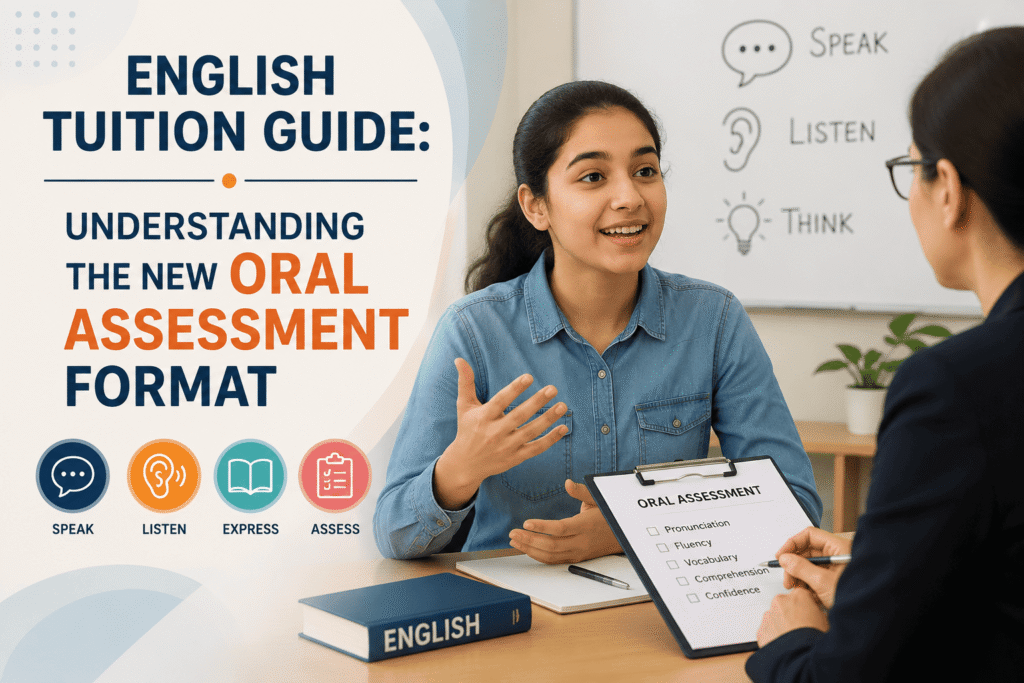
The PSLE English Oral Examination generally consists of two key components:
| Component | Skills Assessed |
| Reading Aloud | Pronunciation, fluency, expression, and accuracy |
| Stimulus-Based Conversation | Ability to respond, share ideas, and communicate clearly |
Each section requires different preparation strategies. Students need more than memorised answers because examiners look for natural communication and meaningful responses.
Reading Aloud: Developing Confidence and Expression
Reading aloud may appear simple, but it requires students to demonstrate several important skills.
Students are assessed on:
- Correct pronunciation.
- Smooth reading pace.
- Appropriate pauses.
- Clear articulation.
- Expression and tone.
Many students struggle because they focus only on reading words correctly without considering meaning or emotions.
To improve reading aloud skills, students should practise:
- Reading different types of texts regularly.
- Paying attention to punctuation.
- Recording themselves while reading.
- Listening to fluent English speakers.
- Practising unfamiliar vocabulary.
Regular practice helps students sound more natural and confident during examinations.
Stimulus-Based Conversation: Learning to Express Ideas
The Stimulus-Based Conversation section requires students to respond to a visual stimulus and discuss related topics.
Students may need to:
- Describe what they observe.
- Share personal experiences.
- Explain opinions.
- Suggest solutions.
- Discuss values or lessons.
This section tests whether students can think independently and communicate their thoughts clearly.
A strong response usually includes:
- A clear answer to the question.
- Supporting examples.
- Personal experiences or opinions.
- A logical explanation.
For example, if students are shown a picture related to environmental protection, they should not only describe the image but also discuss why protecting the environment is important and how individuals can contribute.
How English Tuition Helps Students Prepare
The changing expectations of oral assessments require students to practise communication regularly. This is where structured English Tuition can provide valuable support.
A good tuition programme helps students by offering:
- Regular speaking opportunities.
- Personalised pronunciation feedback.
- Guided conversation practice.
- Vocabulary improvement activities.
- Confidence-building exercises.
- Mock oral examinations.
Teachers can identify individual weaknesses and provide specific strategies to help students improve.
Building Better Speaking Habits
Many students understand English well but hesitate when speaking because they worry about making mistakes. Developing confidence requires regular practice in a supportive environment.
Students can improve their speaking skills by:
- Speaking English regularly at home.
- Discussing daily activities.
- Reading stories aloud.
- Practising answering open-ended questions.
- Learning useful phrases for expressing opinions.
The more students use English naturally, the easier it becomes to communicate confidently.
Improving Vocabulary for Oral Communication
A strong vocabulary allows students to express their thoughts more accurately.
Instead of memorising random words, students should learn vocabulary through different contexts.
Useful approaches include:
- Reading newspapers and storybooks.
- Learning descriptive words.
- Keeping a vocabulary journal.
- Using new words in conversations.
- Discussing different topics regularly.
For oral assessments, students need words that help them describe situations, explain opinions, and provide examples.
Common Challenges Students Face
Many students experience difficulties when preparing for oral examinations.
Common challenges include:
| Challenge | How Students Can Improve |
| Speaking too softly | Practise reading aloud confidently |
| Limited vocabulary | Read widely and learn words in context |
| Difficulty organising thoughts | Use simple response structures |
| Nervousness during speaking | Practise through regular conversations |
| Poor pronunciation | Receive feedback and repeat practice |
Identifying these challenges early allows students to improve gradually.
How Parents Can Support Oral Preparation
Parents play an important role in creating opportunities for children to practise English naturally.
Simple activities at home can include:
- Asking children to share their opinions.
- Discussing books or news topics.
- Encouraging storytelling.
- Watching educational programmes together.
- Practising conversation questions.
Parents should focus on encouraging communication rather than correcting every mistake immediately. A positive environment helps children become more willing to speak.
Choosing the Right English Tuition Programme
When selecting an English tuition programme, parents should consider whether the lessons support both examination preparation and practical communication skills.
Important factors include:
| Feature | Importance |
| Experienced teachers | Provides effective language guidance |
| Oral practice sessions | Improves speaking confidence |
| Individual feedback | Helps students overcome weaknesses |
| Interactive lessons | Encourages active participation |
| Structured materials | Supports consistent progress |
A balanced programme prepares students for examinations while helping them become confident English users.
Supporting Long-Term English Development
Language learning requires continuous improvement and consistent practice. Students benefit most when they receive guidance that focuses on communication, creativity, and confidence.
Education providers such as Mavis Tutorial Centre support students through structured learning approaches that strengthen their reading, writing, speaking, and listening abilities. With regular practice and personalised guidance, students can become more comfortable using English in academic and everyday situations.
Final Thoughts
The new PSLE English Oral Assessment format highlights the importance of communication skills, confidence, and effective expression. Students are expected to do more than simply memorise answers; they need to think clearly and communicate naturally.
With the support of quality English Tuition, students can develop stronger speaking abilities, improve pronunciation, and prepare effectively for oral examinations. Consistent practice, encouragement from parents, and guidance from experienced educators can help students approach the assessment with greater confidence.
For parents looking to support their child’s English learning journey with structured guidance and effective preparation, visit mavistutorial.com to explore suitable programmes.