

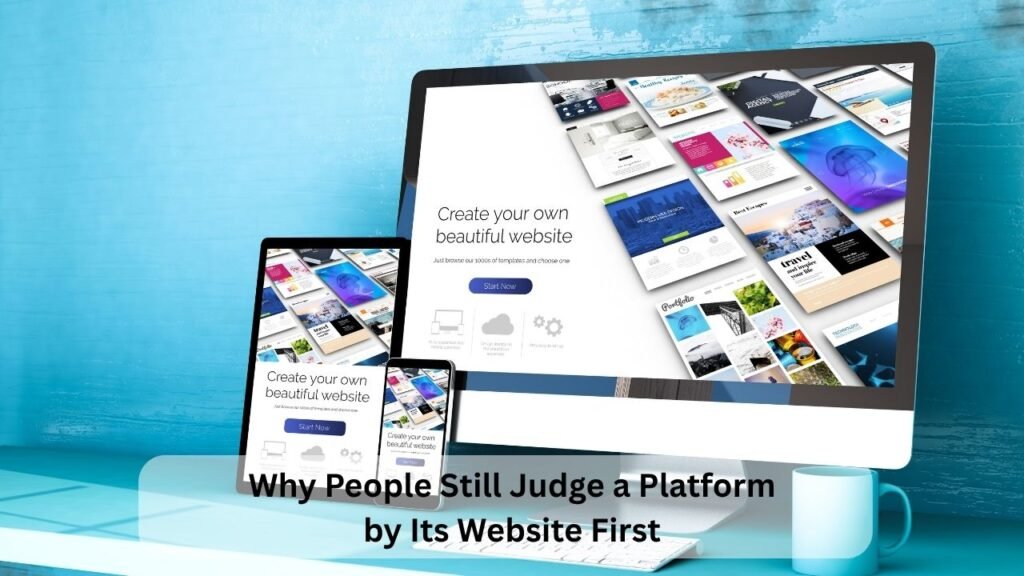
People may discover new platforms through apps, search results, forwarded links, and social media mentions, but the website still shapes the first real impression. That is where trust begins or falls apart. A person can ignore a flashy ad, skip a post, or scroll past a recommendation, but once the website opens, the experience becomes more direct. The layout, the structure, the speed, and the general tone start answering a silent question almost immediately. Does this feel official, stable, and clear, or does it feel rushed and unreliable. That reaction happens fast, and most users do not explain it in technical language. They simply decide whether to keep going.
This matters even more now because people move across digital spaces at high speed. A link arrives in chat. A browser tab opens. A login page appears. The whole path can happen in seconds. Under that kind of pressure, users rely on instinct more than they realize. They read tone, structure, and visual order before they consciously read details. That is why a platform’s website still carries so much weight. It does not just provide information. It signals whether the service behind it feels organized enough to trust.
What people notice before they start reading closely
The first moments on a website are not really about content depth. They are about orientation. People want to know where they are, what the site is for, and whether the next step feels obvious. A page can look modern and still feel off if the menu is messy, the sections are crowded, or the main action is harder to find than it should be. Users notice that quickly. They may not say the site has weak hierarchy or uneven structure. They will simply say it feels strange or annoying.
That is also why a direct path to a platform, whether someone is looking for information, access, or a service such as the parimatch website, needs to feel clean from the first screen. People want a homepage or landing page that makes sense without effort. If the route feels overly aggressive, confusing, or visually noisy, trust starts thinning out at once. The issue is not whether the site has enough features. It is whether those features are presented in a way that feels controlled. A website that respects the user’s attention usually feels more official than one trying too hard to force movement.
Why structure matters more than decoration
A lot of websites still make the same mistake. They try to create confidence through visual intensity instead of clarity. Bigger banners, more sliders, more prompts, and more competing sections are supposed to look active and impressive. In practice, that often works against them. When too many elements are fighting for attention at once, the user starts feeling pushed instead of guided. That feeling is enough to make a site seem less dependable, even when the service behind it may be perfectly functional.
The calmer sites usually win this comparison. They do not try to prove everything at once. They put the main route in front of the user and let the supporting information sit where it belongs. That kind of restraint makes a platform feel more mature. It shows that the site understands its own purpose. People respond well to that because clear structure reduces hesitation. A person does not need to admire the design. They just need to feel that the site knows what it is doing.
Small details that quietly build confidence
Trust is often built through details that seem minor when viewed one by one. A steady page load. A menu that opens where expected. Text that is easy to scan. Buttons that are clearly labeled. A visible path back to the main section. These are ordinary things, but they shape the emotional tone of the visit. When they work well together, the website feels stable. When they do not, even a strong brand name starts feeling less solid than it should.