

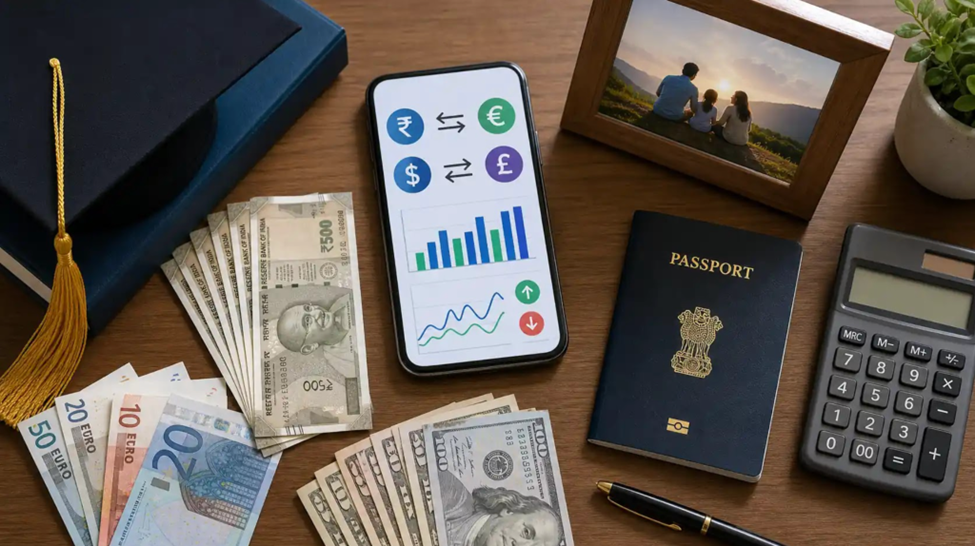
For many families, sending money abroad is just part of everyday life now. Maybe you’re a parent helping your child with monthly expenses while they study overseas, or you’re working abroad and supporting your family back home.
No matter the situation, every time you send money internationally, a currency exchange is involved, and it always comes with a cost. What most people miss is just how much these costs can add up over time. Even a small difference in exchange rates or a hidden fee can mean your loved one receives less money than you expected.
Understanding how currency exchanges work and how to get the best currency exchange rates can make a real difference over time.
Who needs to send money abroad?
Here are the most common situations where people usually need to send money abroad:
Parents supporting students abroad
This is one of the most common use cases where a parent regularly sends money to their child for tuition, accommodation, and daily expenses. Since these transfers are both frequent and high-value, getting a good exchange rate matters a lot.
Professionals supporting families
If you’re working abroad, you might be sending money home for things like household expenses, healthcare, or savings. Here, the periodic frequency of transfers means that even small fees or bad rates can quietly eat into your hard-earned money.
One-time high-value transfers
Sometimes you need to send a large amount quickly, like for tuition fees or an emergency. In such cases, even a slightly better exchange rate can lead to noticeable savings.
Why exchange rates matter?
Whenever you send money abroad, your rupees get converted into another currency. But the rate you see is rarely the rate you actually get. Most providers add their own markup on top of the real exchange rate. This means:
- You pay more INR for the same foreign currency.
- The recipient receives slightly less money than expected.
For large transfers, such as paying tuition fees or rent, even a small difference of 2-5% can mean losing thousands of rupees. And if you’re sending money regularly, that loss compounds over time.
What common charges should you watch out for?
International transfer costs can be unclear due to the different charges involved. Here’s a list of common fees you should be aware of:
- Forex markup rate: This fee is typically the largest because most providers include a markup on the actual market rate, leading to higher costs for you.
- Transfer fees: Some platforms may charge a flat fee or a percentage of the total transaction amount.
- Intermediary charges: Your money often passes through multiple banks before reaching the recipient, and each may take a small cut along the way.
- Receiving bank fees: In some cases, the recipient’s bank may charge a fee to process incoming funds.
Understanding these charges helps you see the real cost of sending money abroad, not just what’s shown upfront.
How to get the best currency exchange rates?
Getting the best value is all about being aware and making a few smart choices. Here are a few tips to help you secure the best currency exchange rates:
- Compare the actual rate: Always check the final exchange rate you’re getting, not just the one that’s advertised. The best currency exchange rates are those closest to the real market rate.
- Avoid last-minute transfers: Urgent transfers limit your options and often lead to poorer rates. Planning ahead of time gives you more flexibility to choose the best time for transacting.
- Consolidate transfers: Instead of sending multiple small amounts, try sending larger sums less frequently. This way, you reduce the impact of repeated fees and markups.
- Choose transparent platforms: Look for services that clearly show you the exchange rates, total charges, and the final amount your recipient will get.
- Follow currency trends: You do not need to track the markets every day, but having a basic idea helps. A stronger rupee can get you a better exchange rate, while a weaker one can increase your costs.
Why are digital transfers growing?
International payments have changed dramatically in recent years. Earlier, most transfers were handled through banks, making it hard to see the actual rates and fees. Now, digital platforms have made the process faster, simpler, and much more transparent. They let you:
- Track exchange rates in real time
- Transfer funds anytime and from anywhere
- Monitor transactions through mobile apps
This shift has given people more control over how they manage and spend their money abroad while also making financial planning easier.
Final Thoughts
Sending money abroad, whether for education or family, is essential and, for many, a regular thing. But every time you send money internationally, exchange rates and hidden charges chip away at the amount that actually reaches your loved ones. Over time, these small inefficiencies can add up to a big amount.
This is where choosing the right platform makes a real difference. With digital-first solutions like Niyo, sending money internationally becomes more transparent and efficient. Features such as real-time exchange rates, zero markup on forex, and a fully digital process allow users to transfer funds seamlessly while ensuring better value on every transaction. Whether you’re paying tuition fees overseas or sending money back home, the focus shifts from just completing the transfer to maximising what reaches the recipient. In the end, getting the best currency exchange rates is about being informed, planning, and using smarter tools.